13 Mar 2024
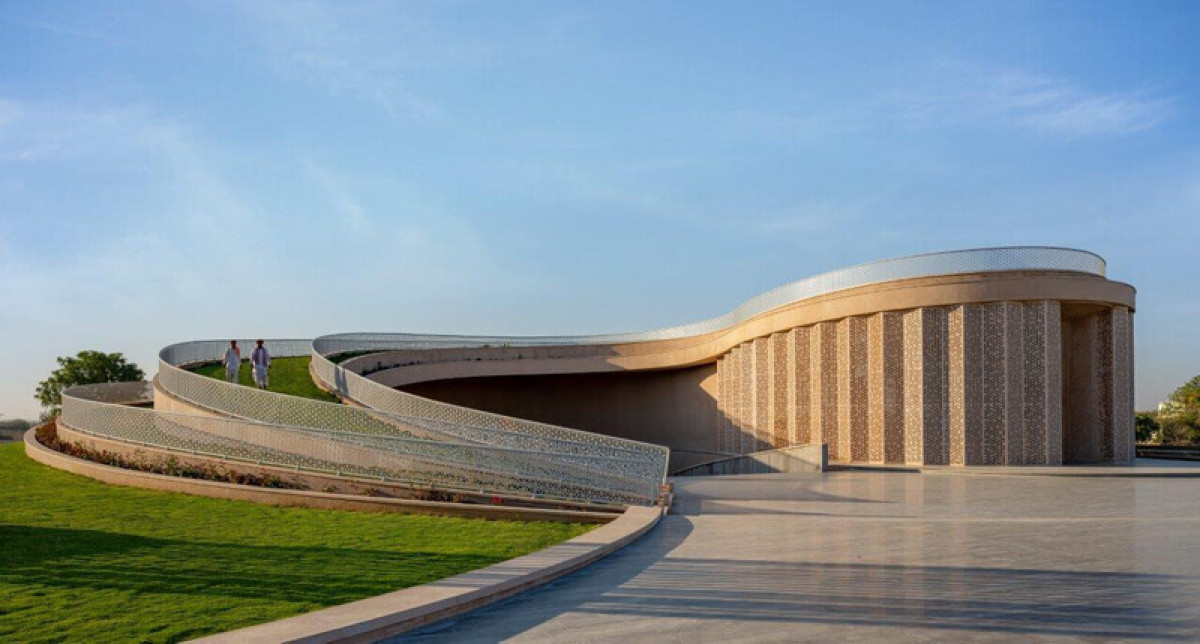
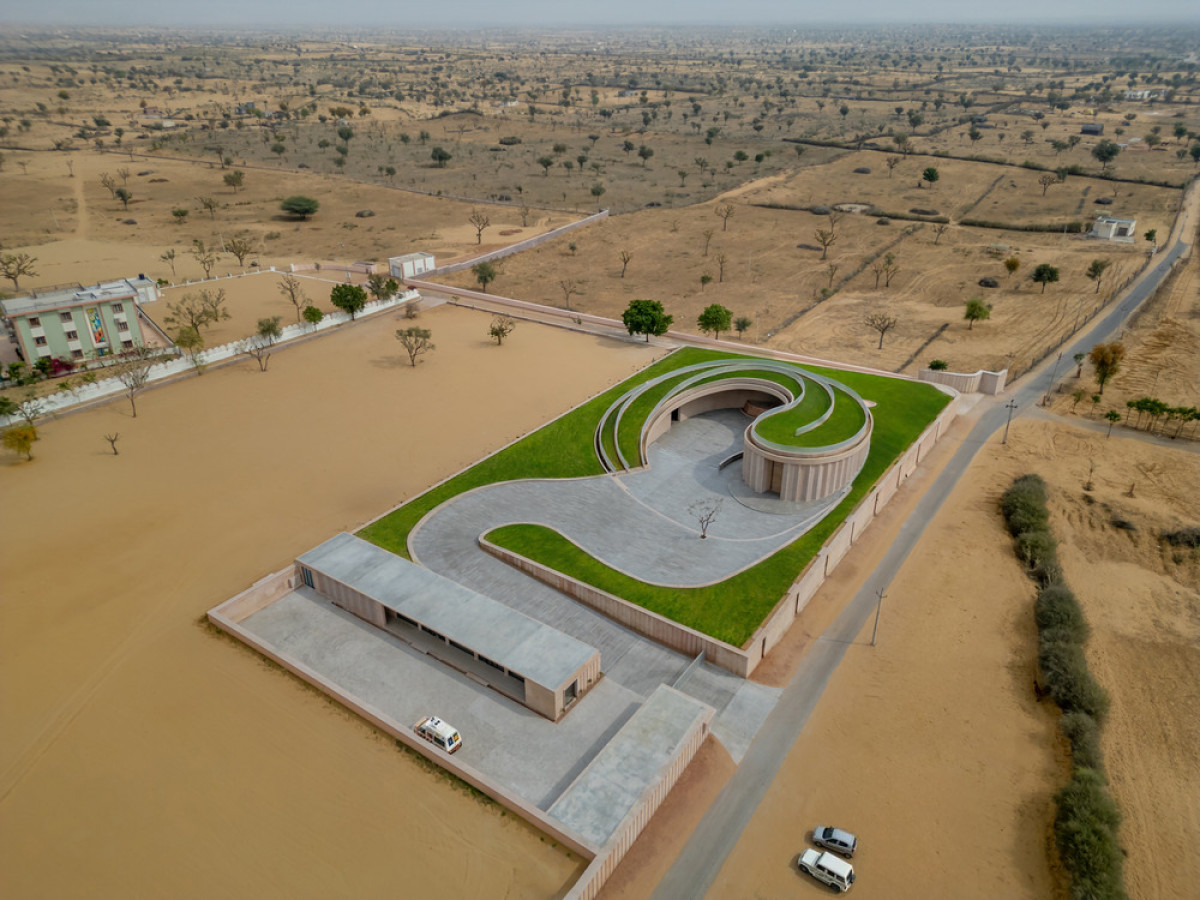
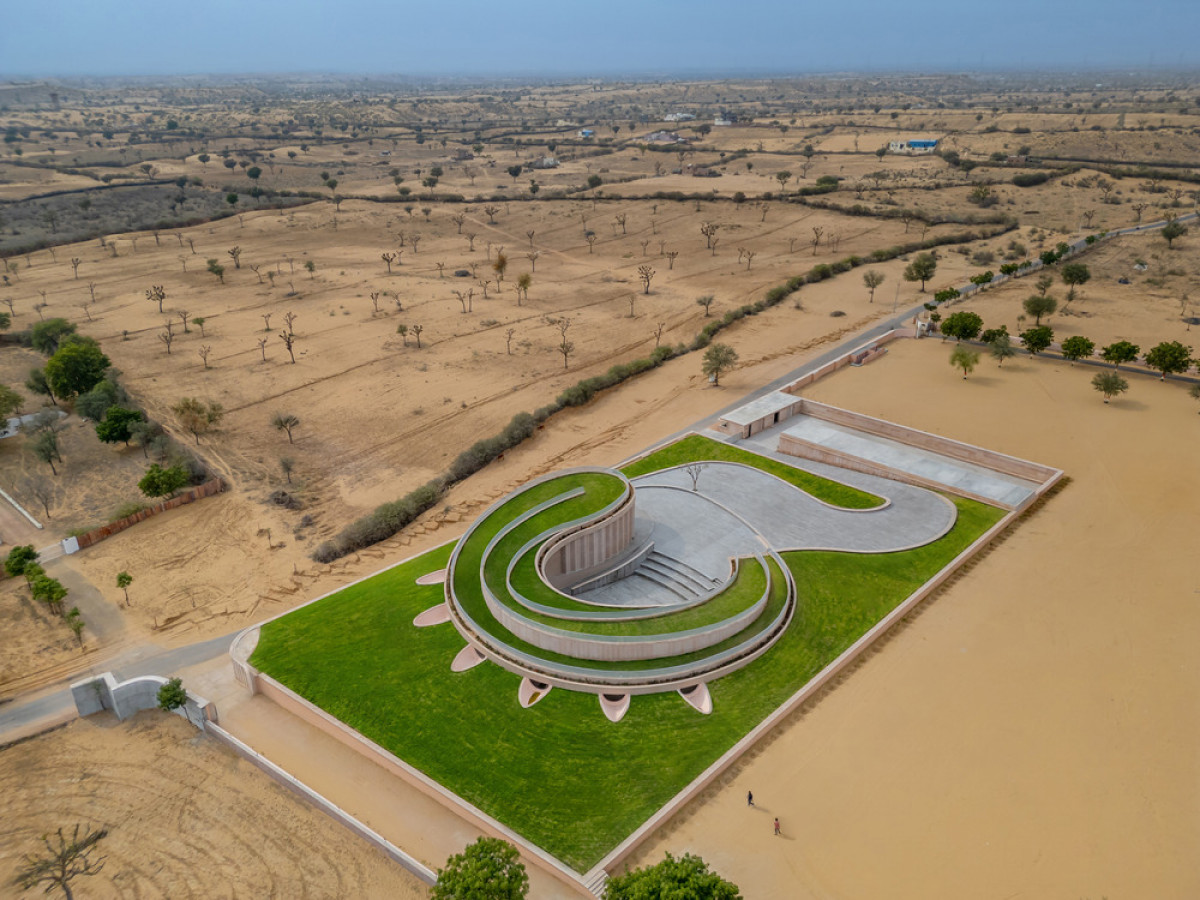
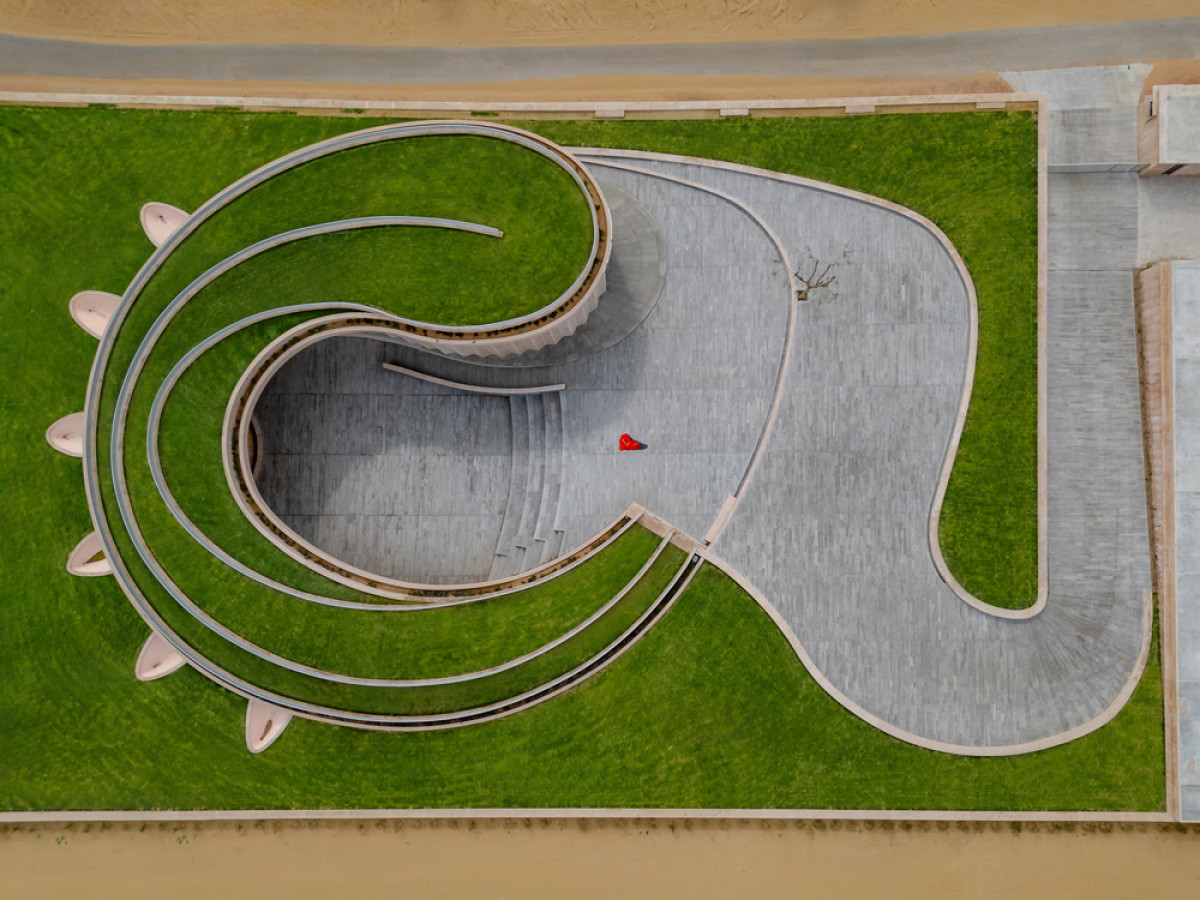
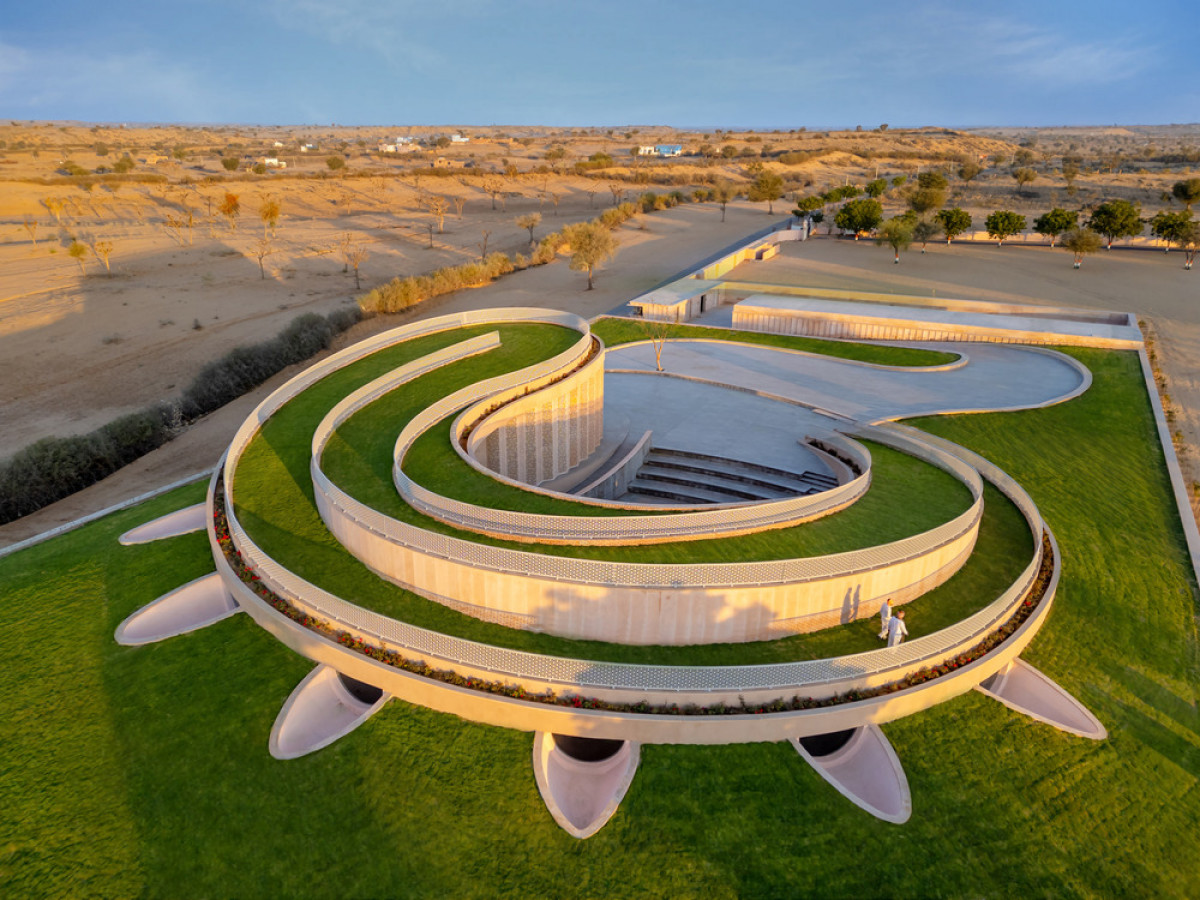
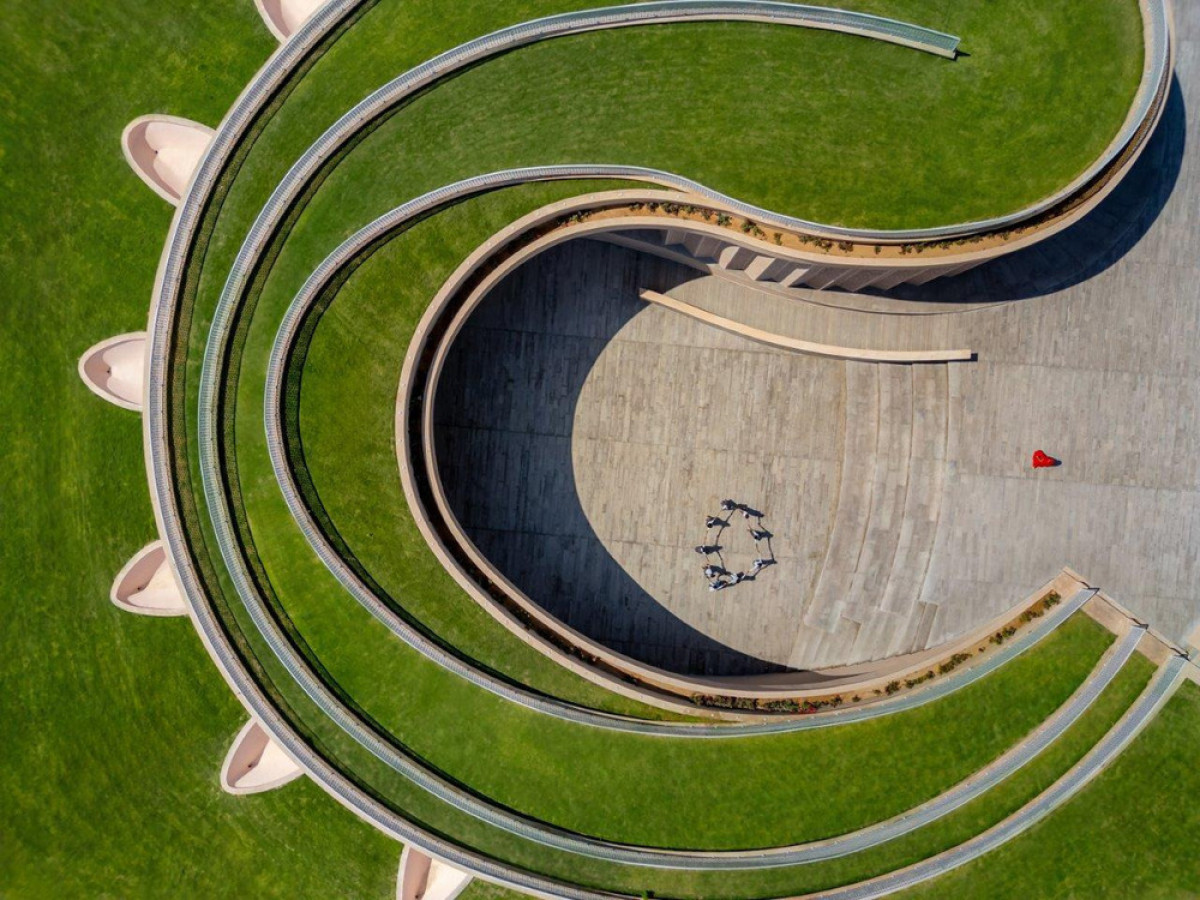
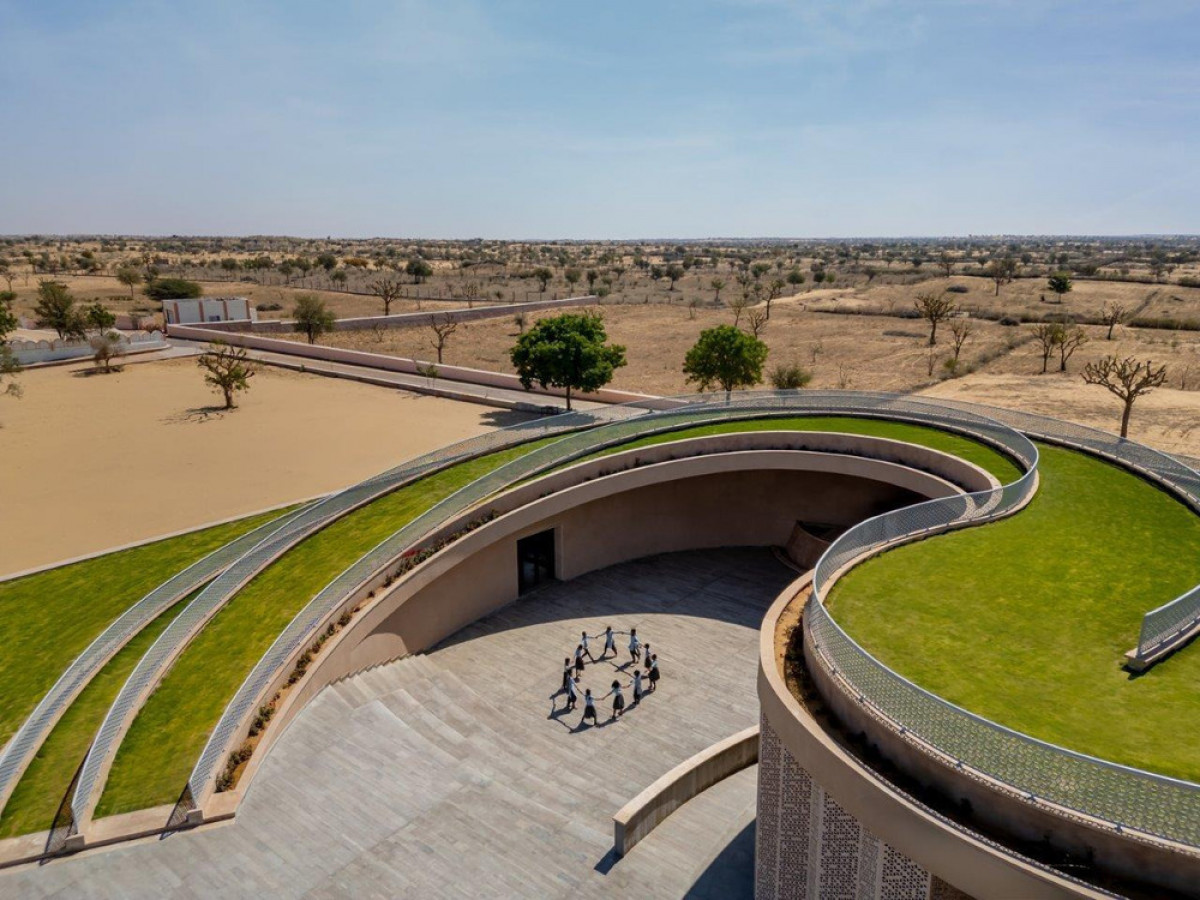
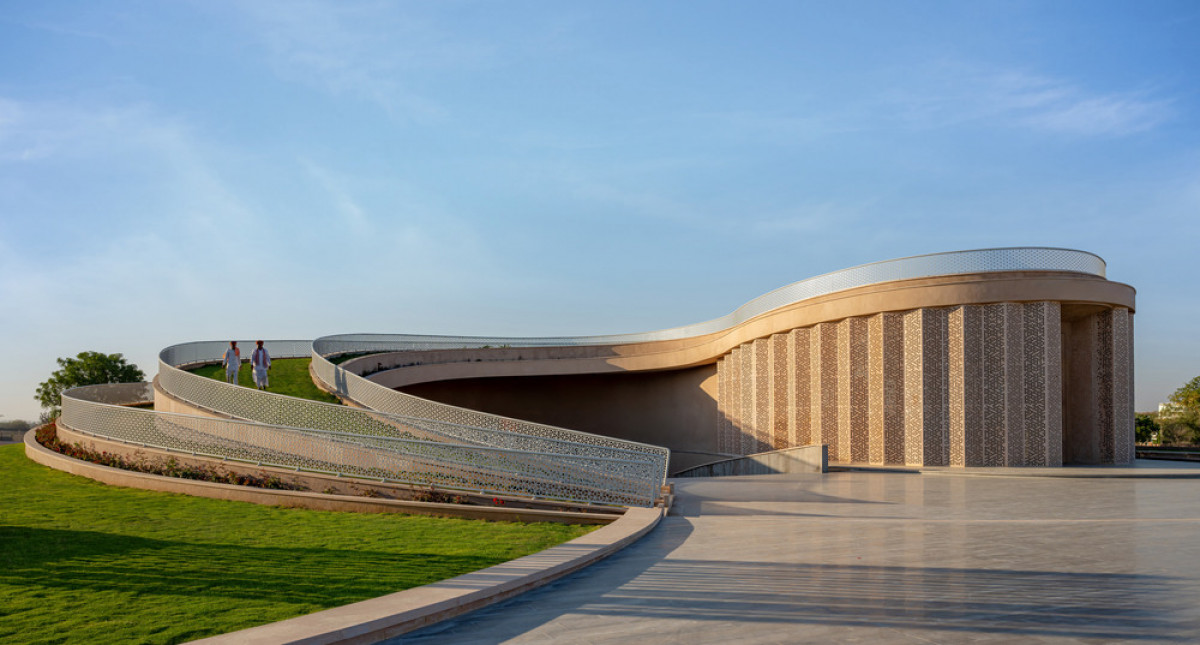
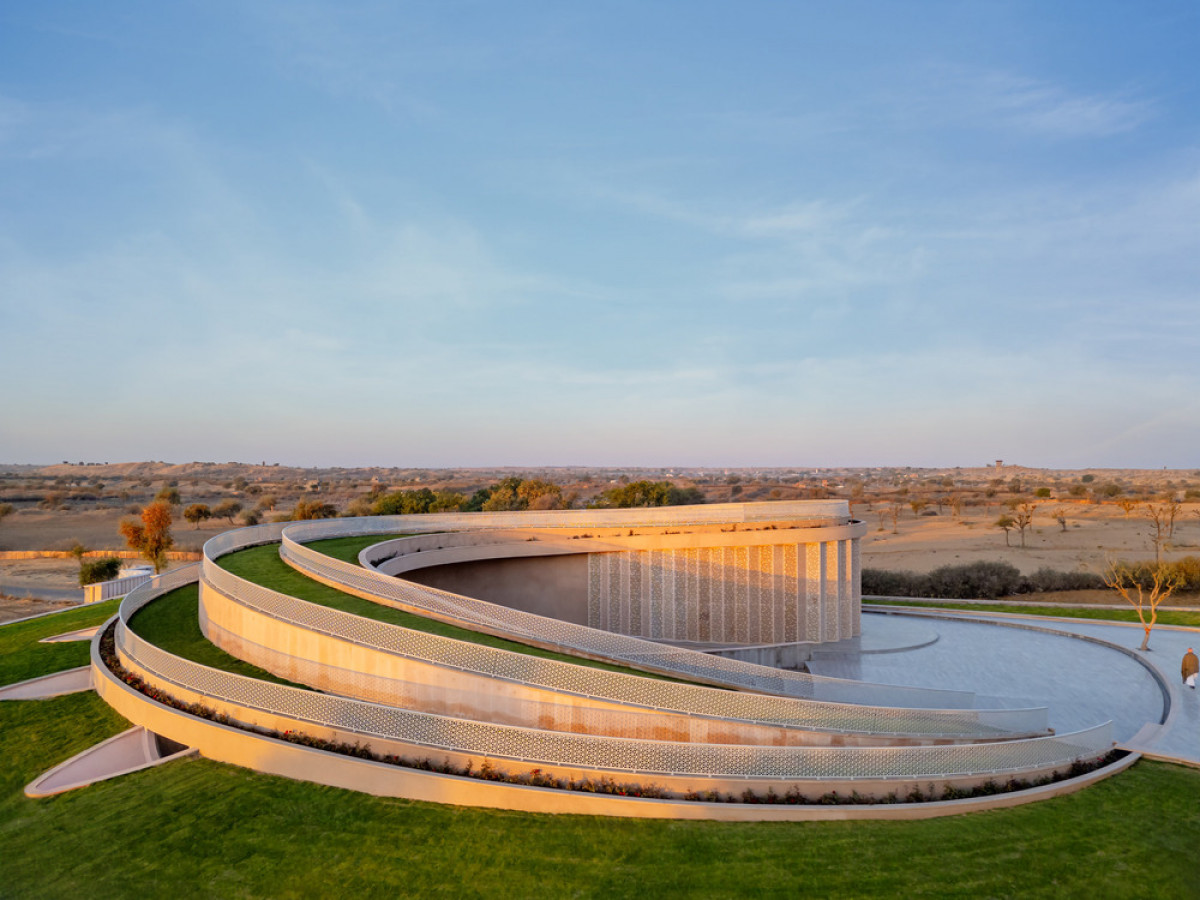
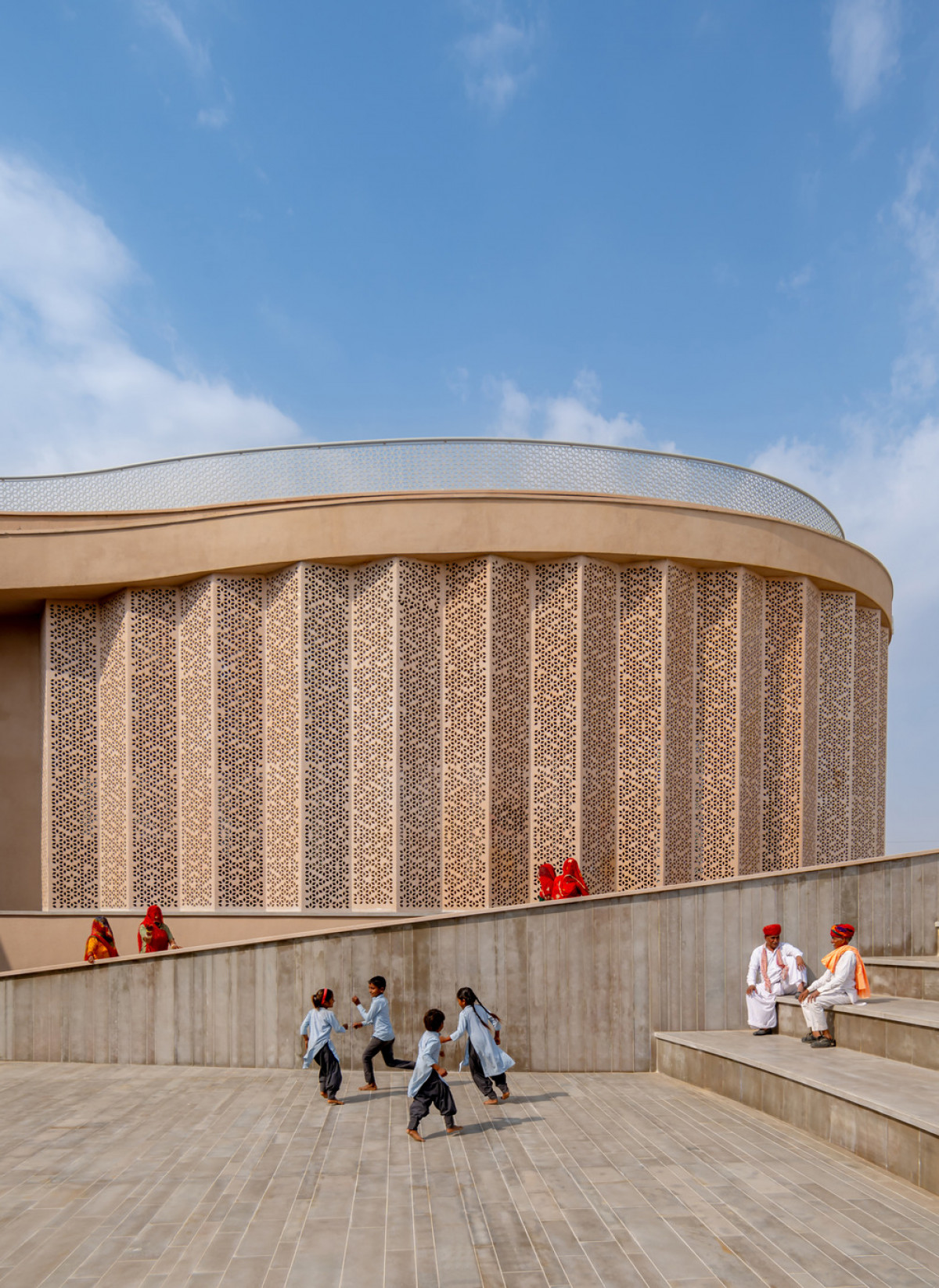
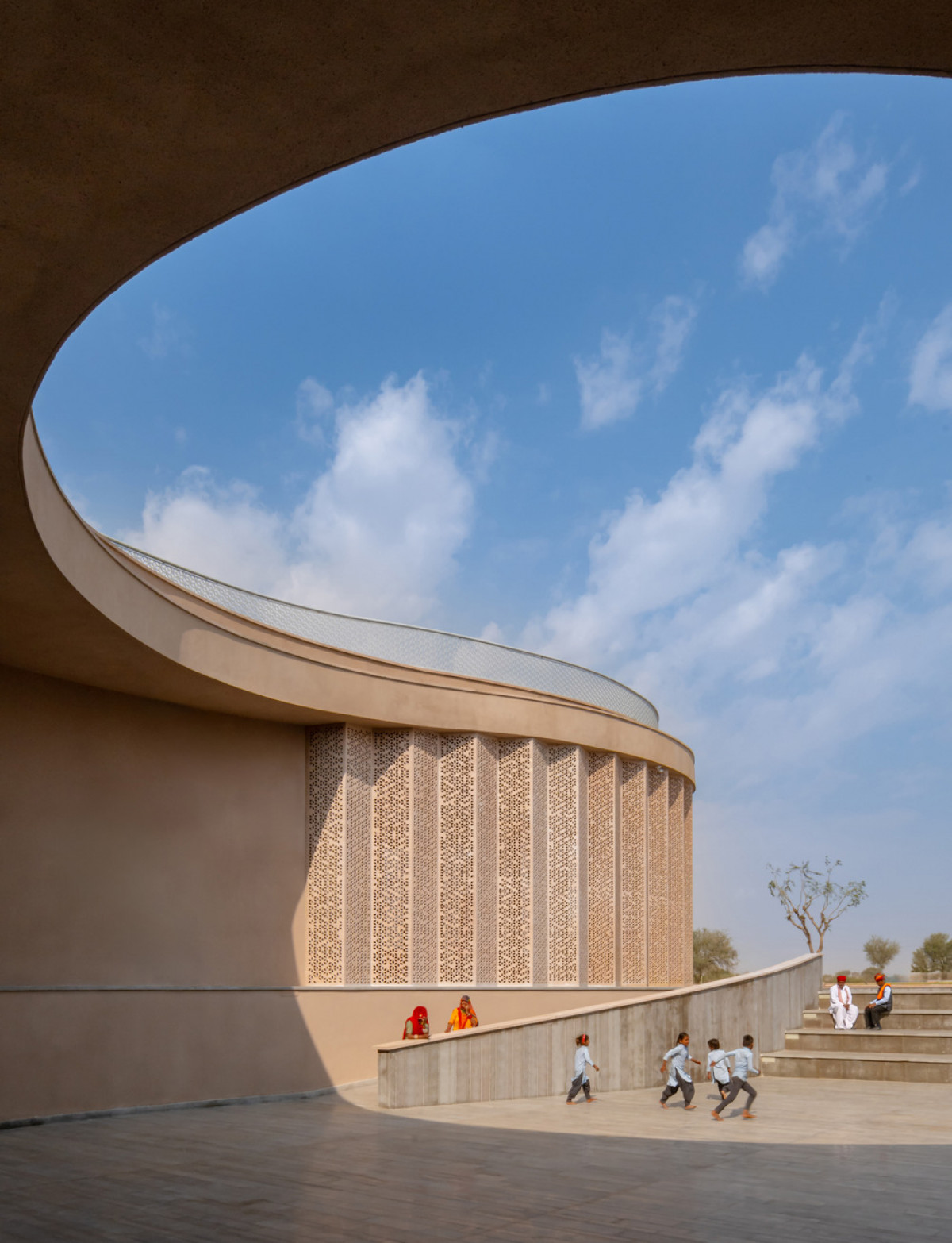
Sanjay Puri Architects presents the Nokha Village Community Centre in the desert region of Nokha in Rajasthan, India. The sweeping curvilinear volume rises from the northeastern corner, looping around the site and rising on the northwest corner to create a north-facing open courtyard.
The clients' brief was to create a memorial for their father, Padmaramji Kularia. Nokha is a district in Rajasthan that encompasses 144 small villages. Studies of the vicinity and the current facilities in the village schools and areas fueled the need to create a community centre for all age groups.
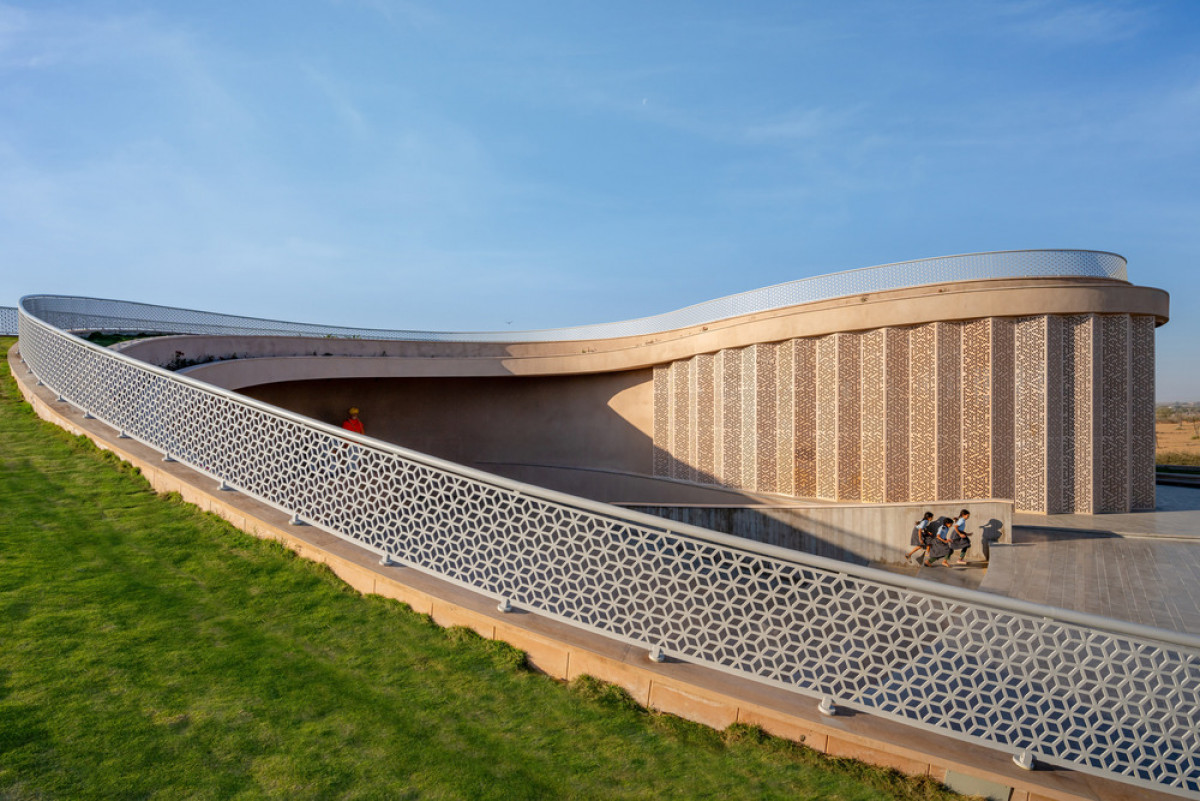
The main spiral building of 9,000 sqft becomes an inclined garden with two varying slopes, allowing it to be used for recreation and gatherings, and offering views of the surrounding desert landscape from the rooftop.
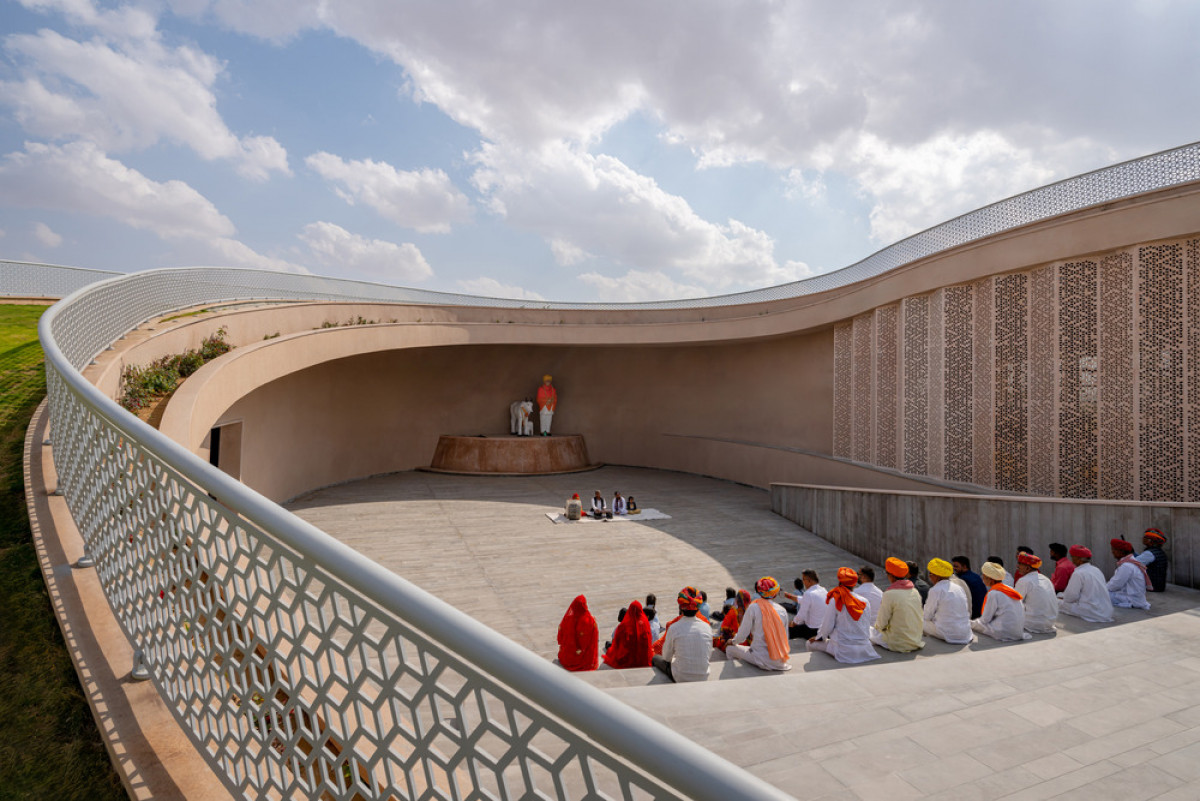
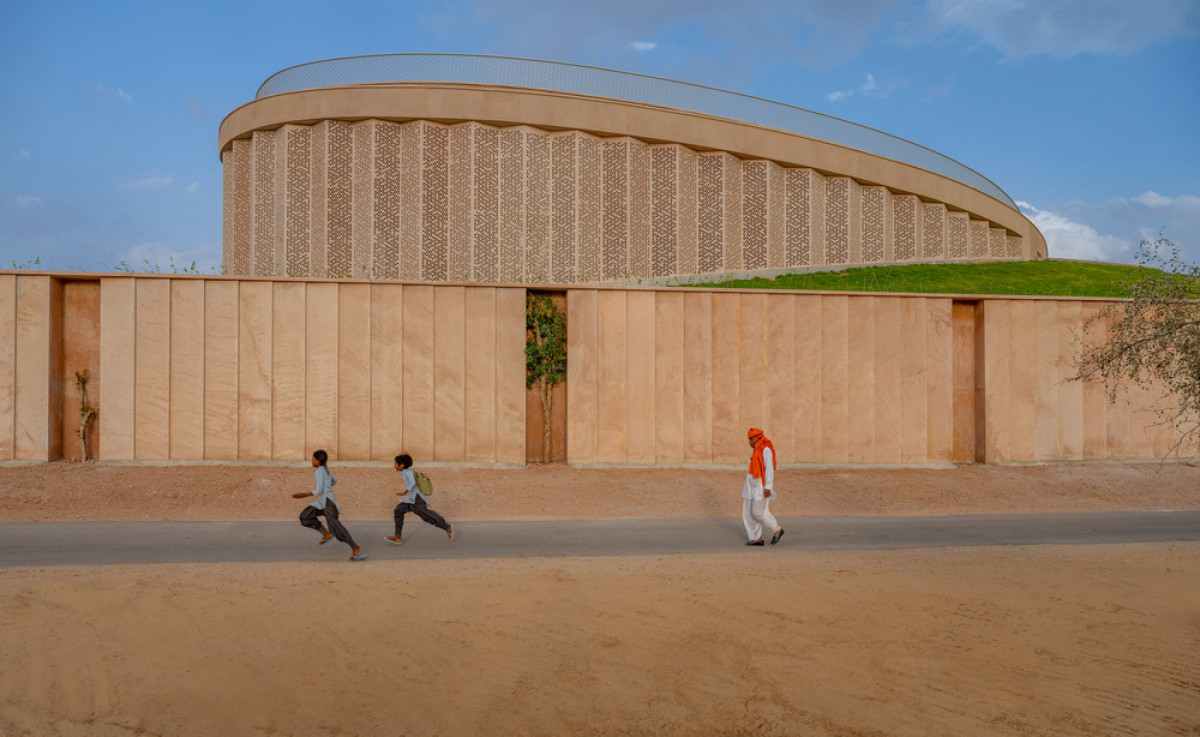
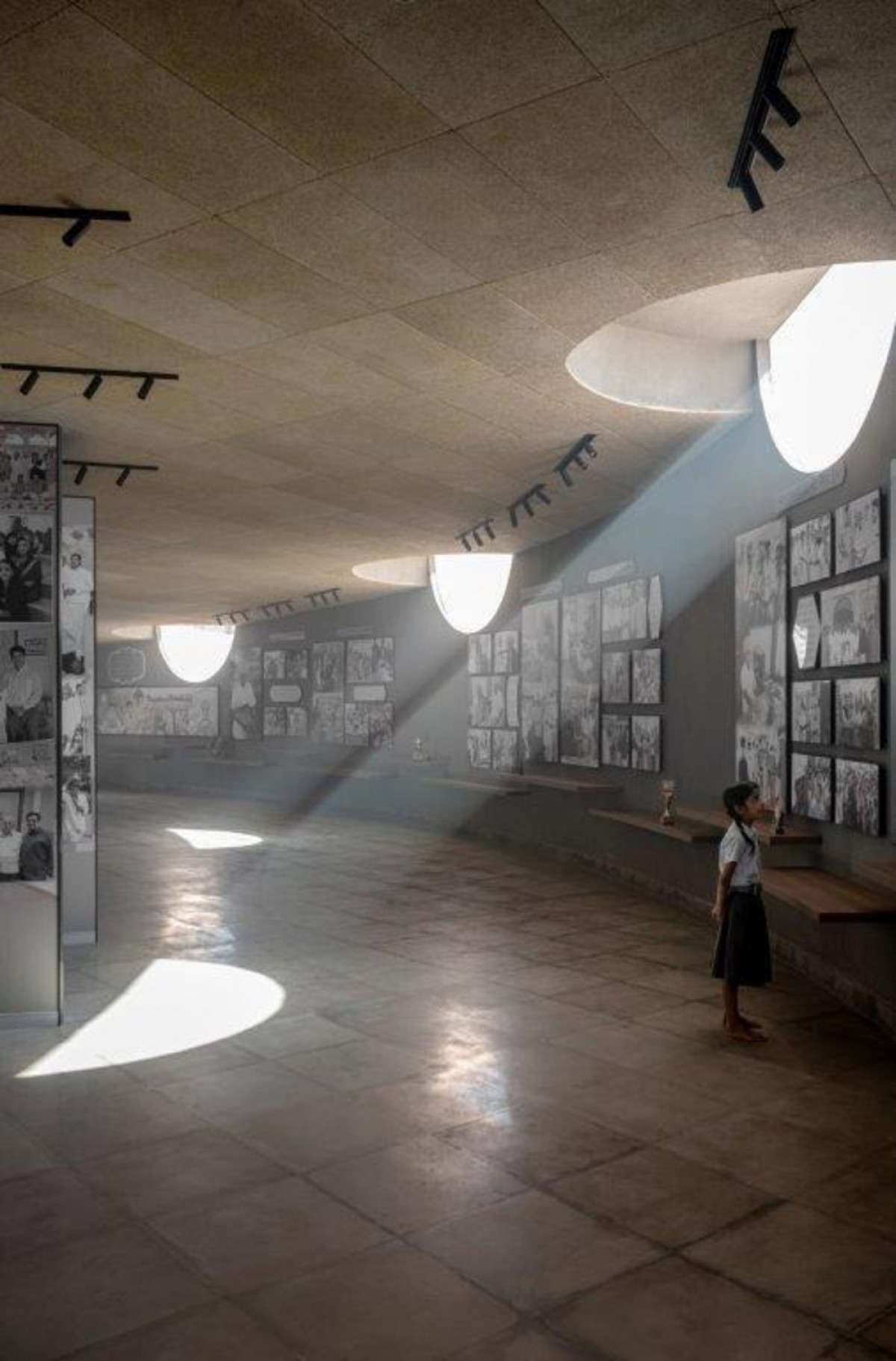
Beneath the garden, on the lower eastern side, there is a small museum with a children’s digital library on the higher western side. The southern side is enveloped in a grass-covered earth berm to mitigate heat gain in response to the desert climate, where temperatures of 35 to 40°C are common for 8 months annually. The building forms an open courtyard with an amphitheatre to provide a space for music performances, talks, and social interaction.
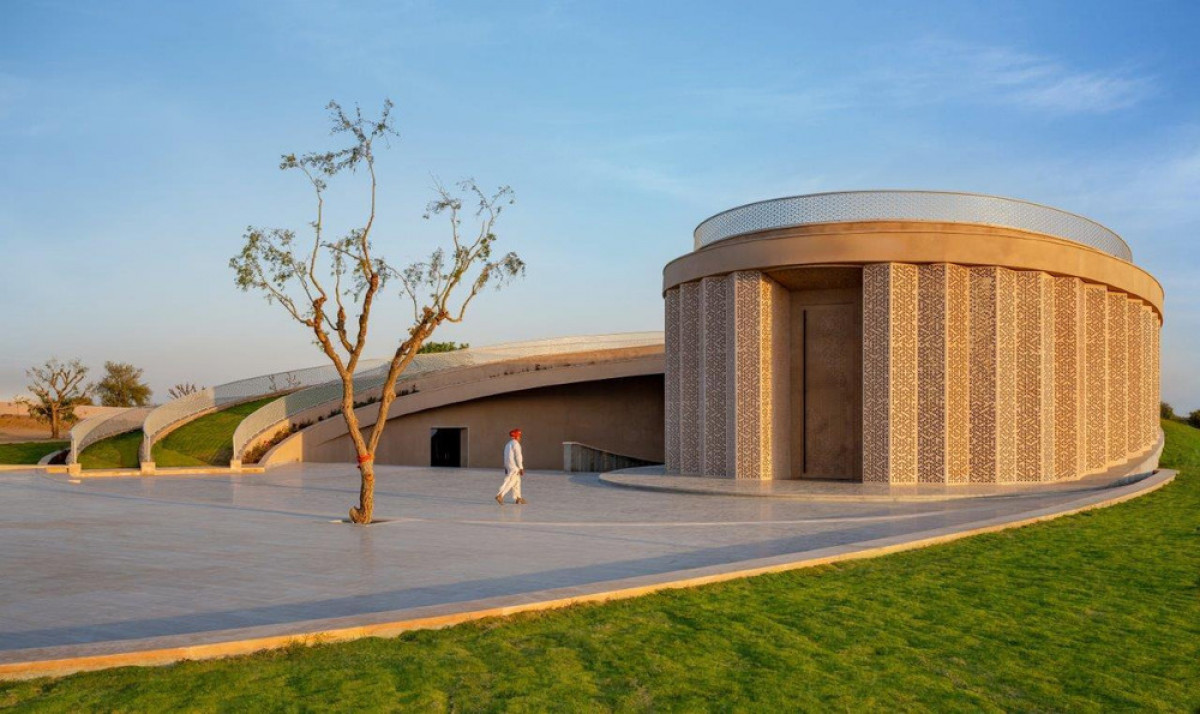
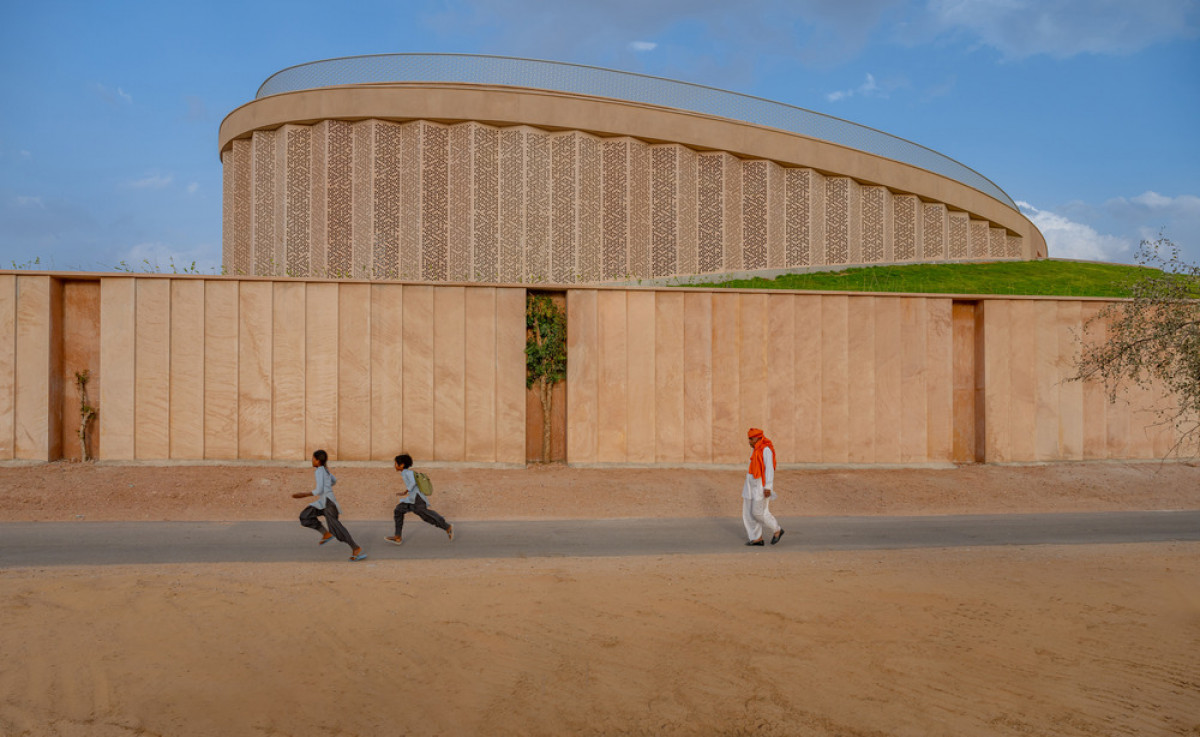
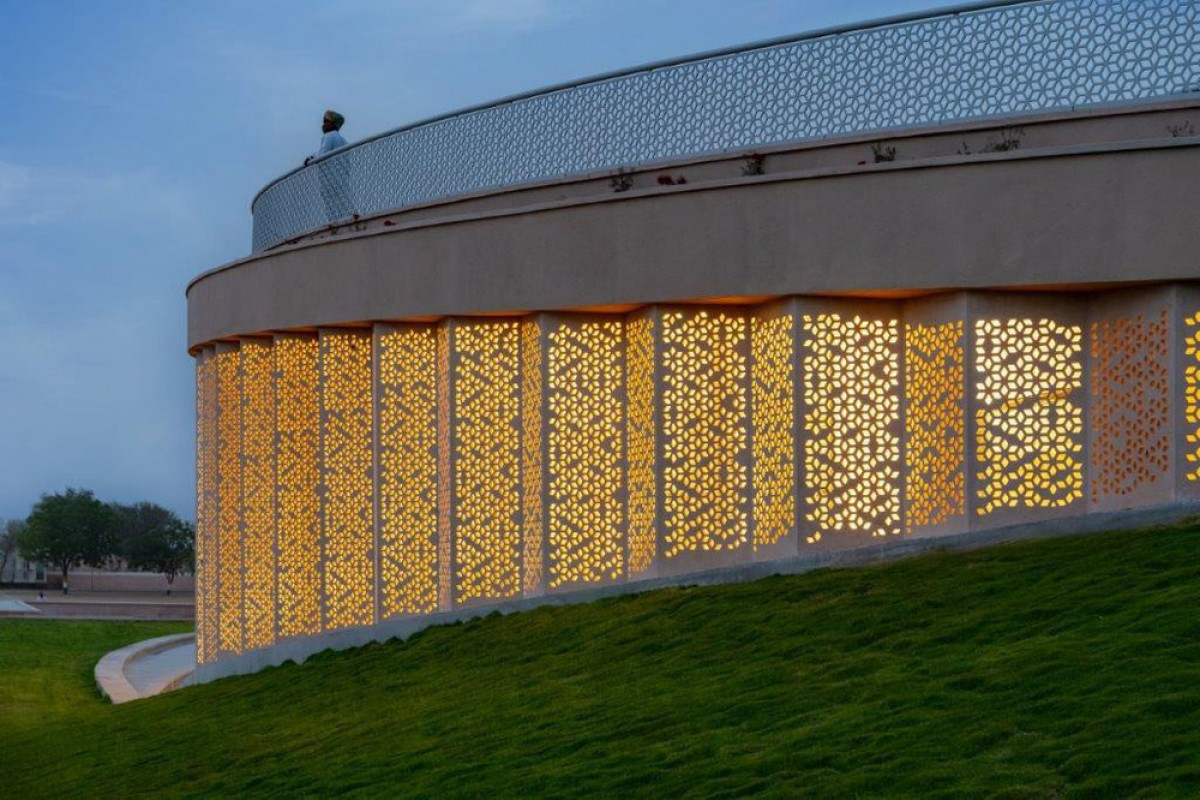
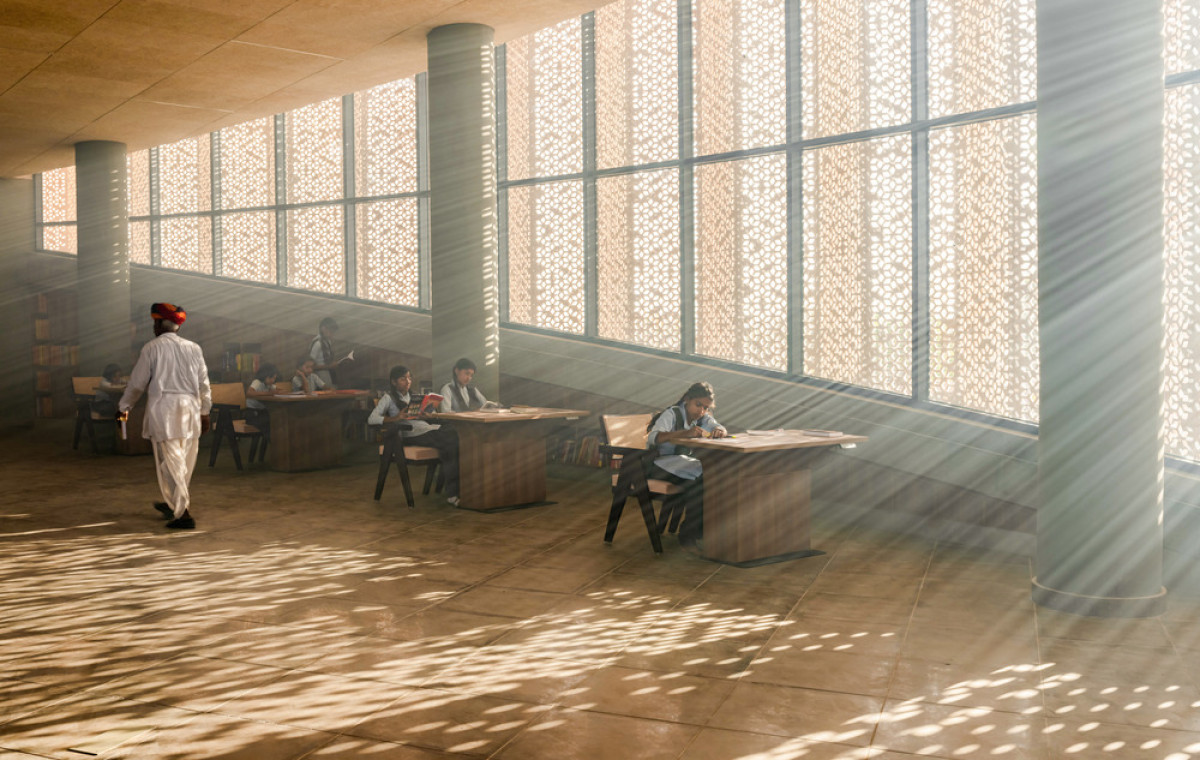
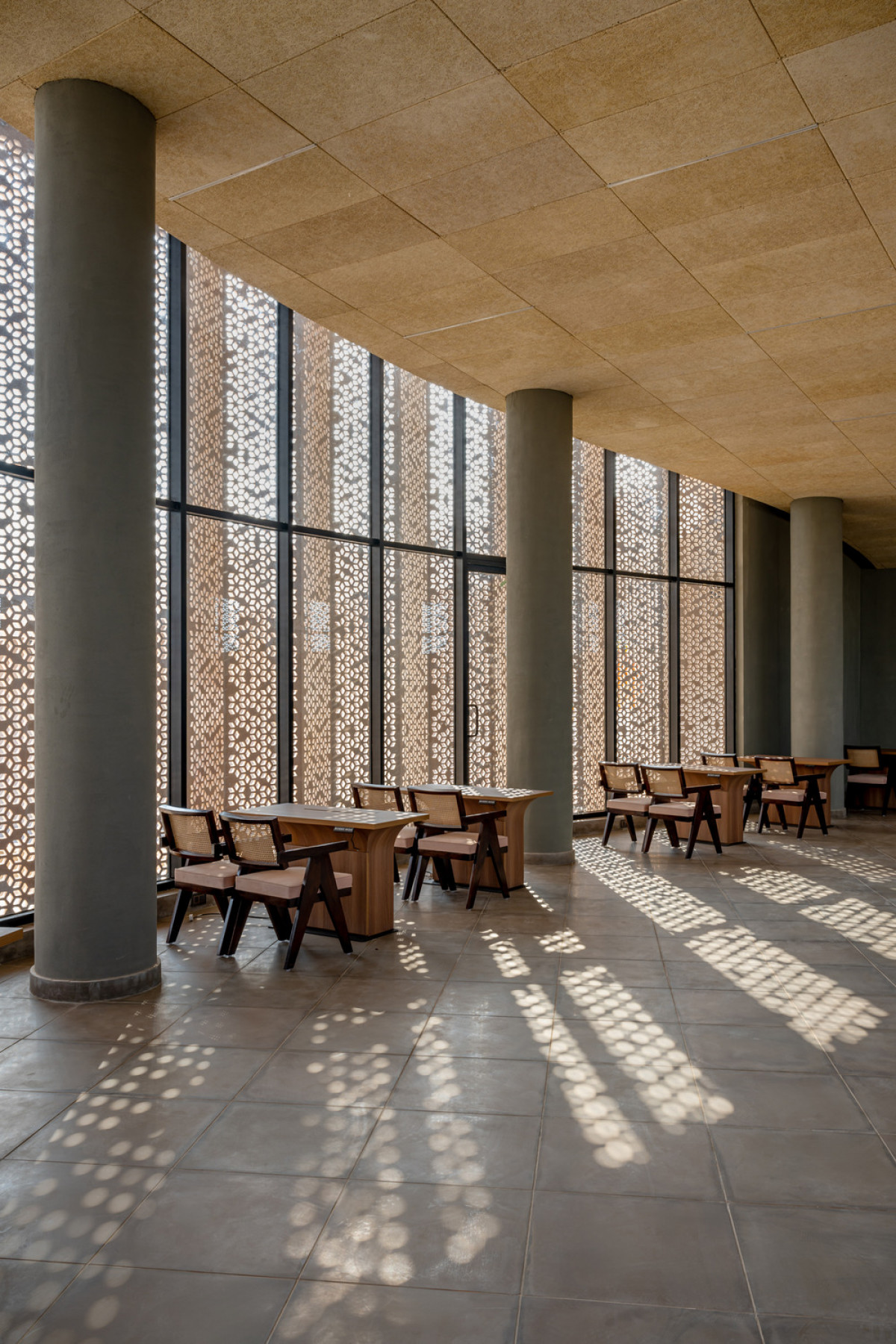
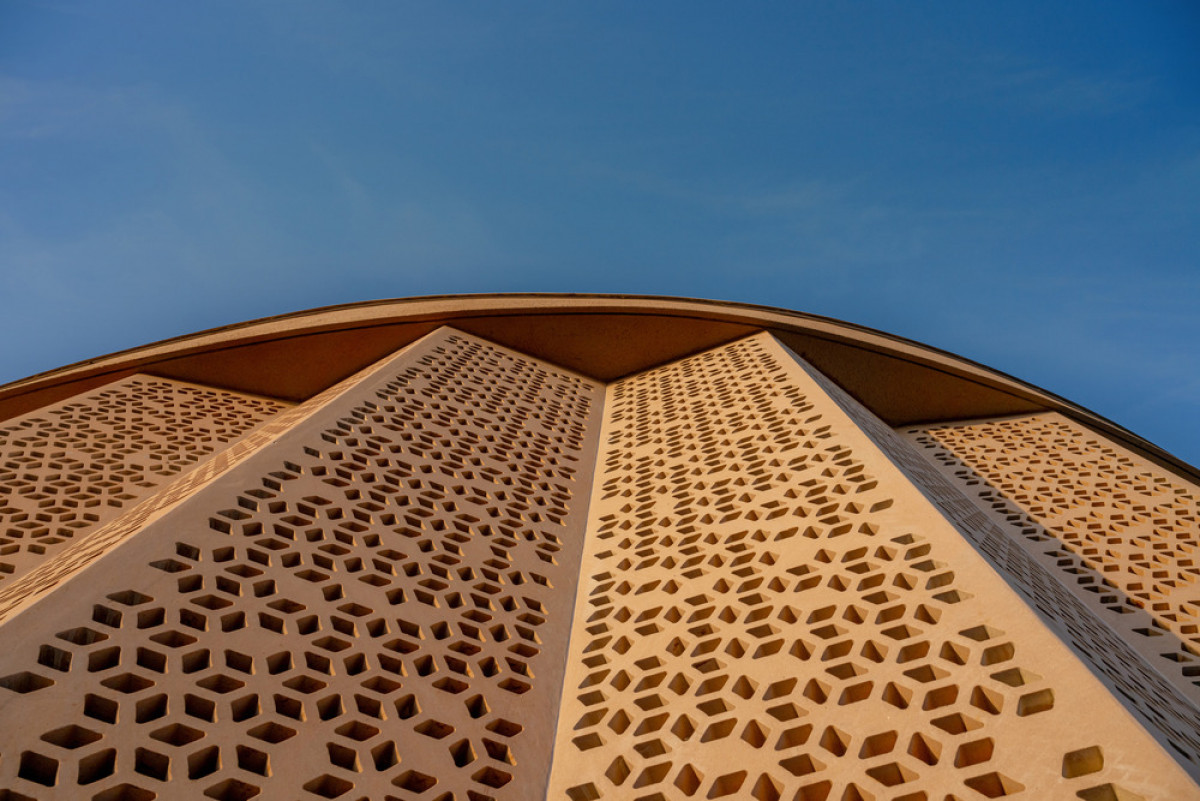
The ovoid library is sheathed in natural sandstone screens derived from traditional architecture in Rajasthan, with the stone being sourced from the immediate surrounding area.
These screens reduce heat gain and create different shadow patterns throughout the day. The library serves all the village schools in the region, most of which do not have libraries of their own. The museum is lit indirectly by scooped recesses within the roof garden berms.
To facilitate the servicing of large gatherings, a linear amenity block housing, cafeteria, toilets, stores, and parking flanks the entrance at the northern side.
The rooftop gardens, the stone screens, the north-facing courtyard, and the southern grass berm collectively reduce the heat gain, rendering the spaces energy efficient. Rainwater harvesting and water recycling make the building and its construction sustainable, using local craftsmen and contract labour with materials available in the region.
A building with a built-up area of only 9,000sqft (810 sqm) generates a 9,000sqft rooftop garden and a 27,000sqft open auditorium and, in addition to the enclosed spaces, generates usable space that is four times more than the built space.
Technical sheet